
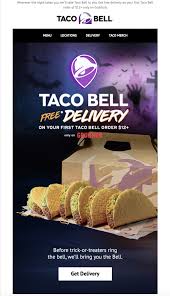
Having happy customers is about building lasting relationships. Email marketing for the restaurant industry is one of the most effective tools for brands to engage audiences directly, encourage repeat purchases, and communicate brand identity. This includes personalized offers and creative campaigns, meaning food brands can leverage email to turn casual customers into loyal fans.
At Phang we’ve worked with a variety of food brands, helping them design email campaigns that are visually appealing, strategically timed, and tailored to audience interests. Our campaigns for clients demonstrate how targeted email marketing can increase engagement, drive conversions, and build long-term brand loyalty.
Food brands benefit from email marketing because it allows them to speak directly to their customers, highlight new products, promote events or seasonal items, and reinforce their brand story. When paired with strong design, compelling copy, and data-driven segmentation, email marketing can turn digital communication into measurable business growth.
Case Study 1: Starbucks – Personalized Engagement and Seasonal Campaigns
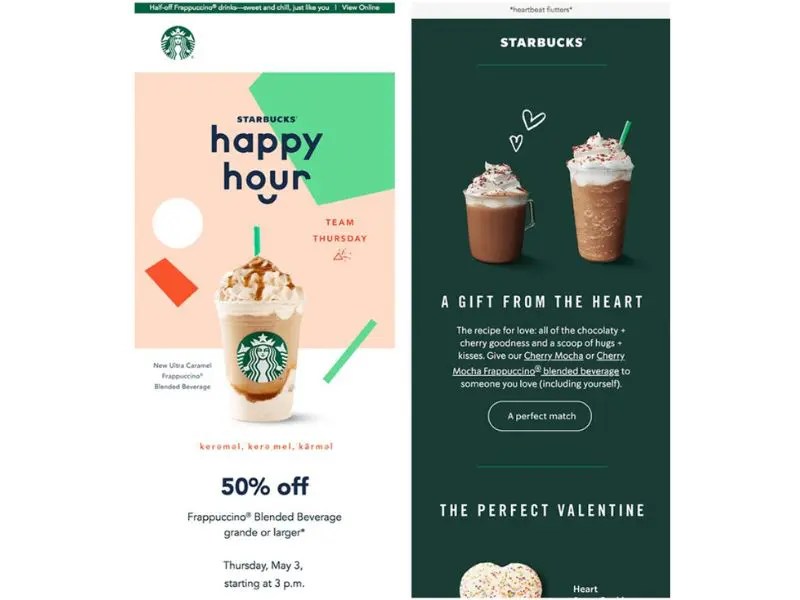
Starbucks has become a leading example of how effective email marketing can strengthen customer loyalty and drive sales. Through the Starbucks Rewards program, the brand sends personalized emails with offers, seasonal promotions, and updates on rewards and app features.
This loyalty-driven email strategy allows Starbucks to maintain consistent communication with millions of customers while delivering highly targeted content. Instead of sending generic promotions, Starbucks leverages customer data such as previous purchases, location, and engagement patterns to tailor messages that feel personal and relevant. This data-driven approach helps the brand maintain high open rates while encouraging customers to interact with both the brand and its mobile ecosystem.
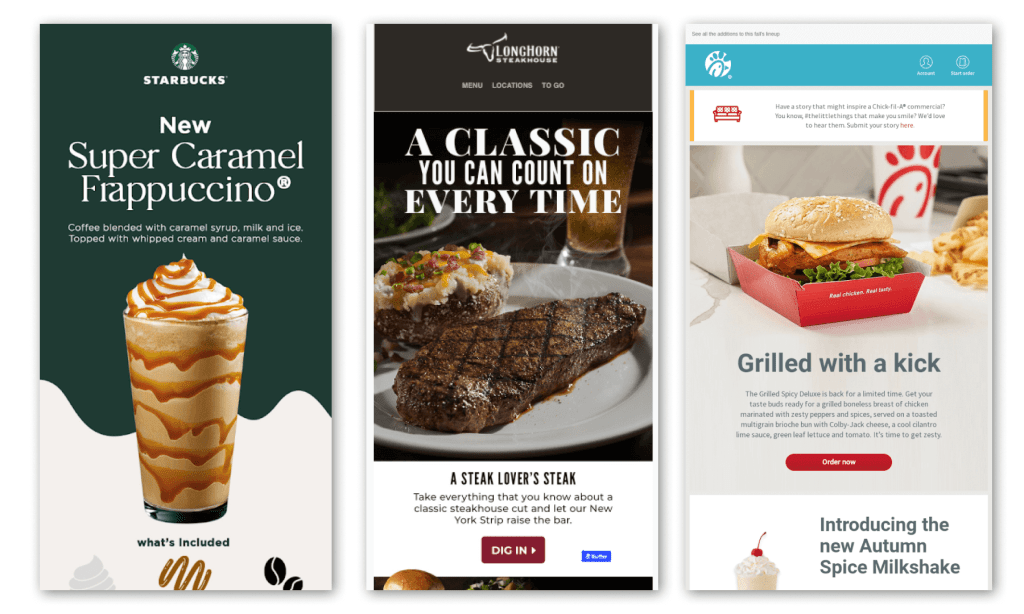
Starbucks’ emails are carefully designed to be visually appealing, often featuring vibrant imagery of drinks and seasonal products. They combine clear calls-to-action with compelling copy, encouraging customers to visit stores, order online, or engage with the Starbucks app. The personalization ensures that customers receive content relevant to their location, preferences, and past purchases.
Seasonal campaigns are particularly effective for Starbucks’ email strategy. Promotions for drinks like the Pumpkin Spice Latte or holiday beverages are launched through visually striking emails that build anticipation and excitement among subscribers. By pairing limited-time products with engaging visuals and strategic messaging, Starbucks transforms email campaigns into powerful marketing moments that drive both online engagement and in-store traffic.
By integrating rewards program data with email marketing, Starbucks strengthens customer relationships while encouraging repeat visits and higher engagement with its mobile app. This approach highlights how strategic email campaigns can create measurable business impact, turning casual customers into loyal advocates.
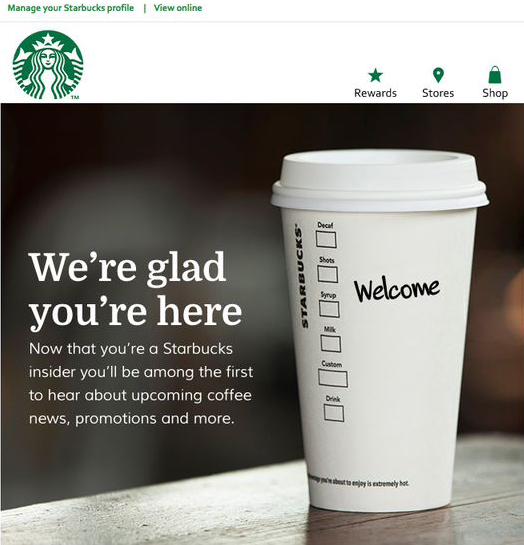
Case Study 2: Taco Bell – Creativity, Brand Voice, and Engagement
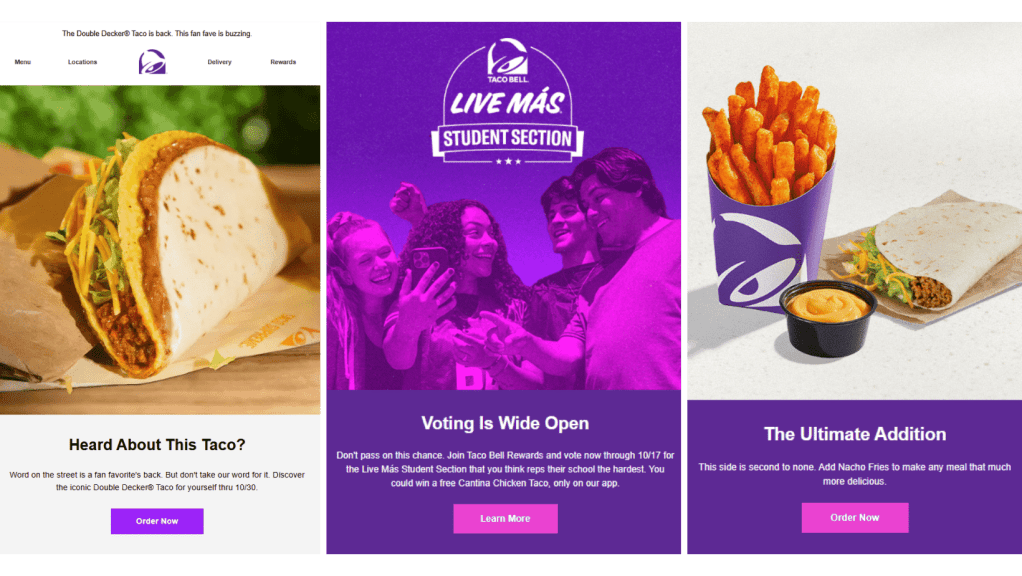
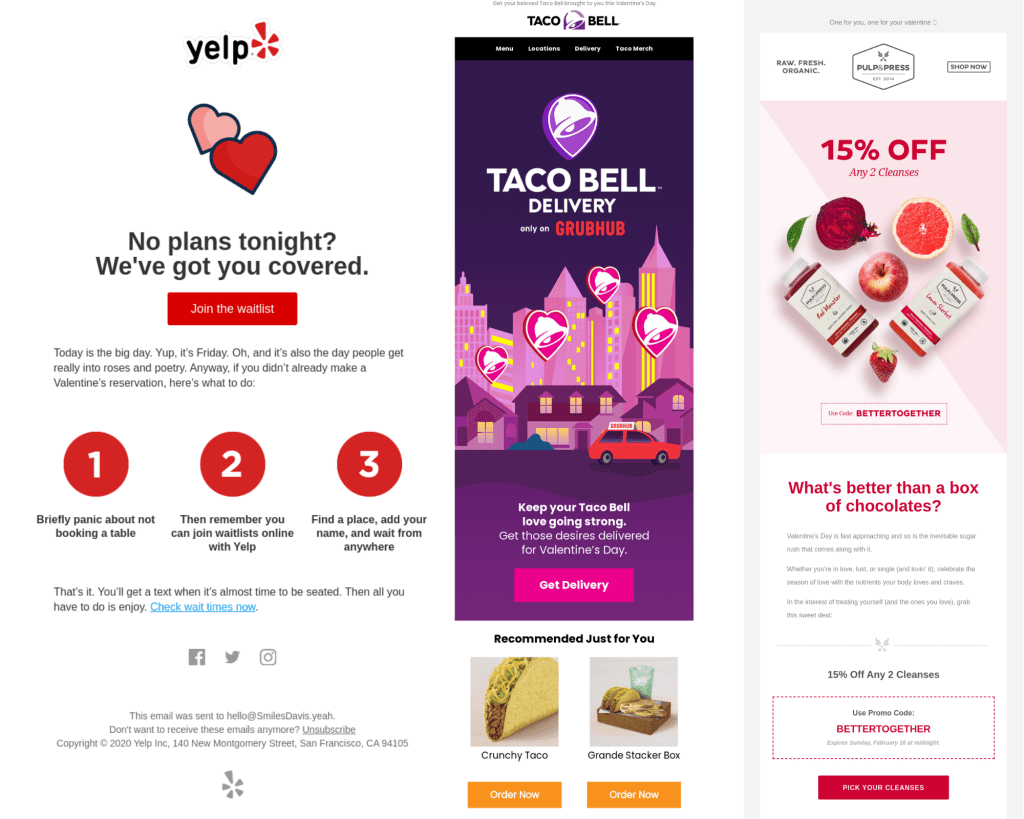
Taco Bell provides a contrasting but equally effective approach to email marketing, focusing on brand personality and creative campaigns. The brand’s emails often feature consistent branding including bold visuals (love the purple!), playful copy, and references to pop culture, promoting limited-time menu items, promotions, and interactive campaigns.
Rather than relying solely on discounts or traditional promotions, Taco Bell uses email as a storytelling tool that reflects its distinctive brand voice. The brand frequently incorporates humor, meme-inspired language, and culturally relevant references that resonate with its younger audience. This playful tone allows Taco Bell’s emails to feel less like advertisements and more like entertaining content that subscribers actually enjoy opening.
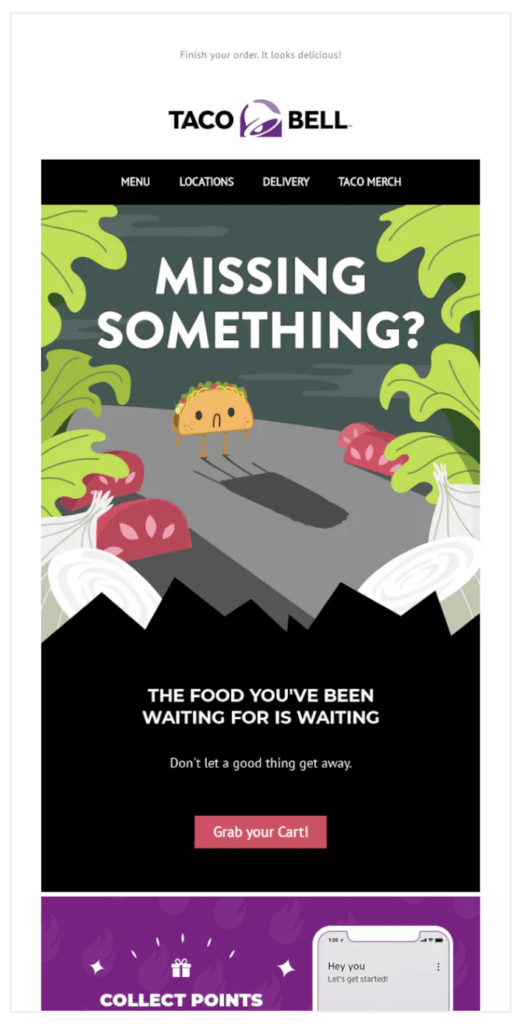
One of Taco Bell’s key strengths lies in using email to engage younger audiences. Campaigns integrate humour, eye-catching graphics, and links to social media challenges, encouraging subscribers to share content and participate in online conversations. These emails not only drive foot traffic and sales but also reinforce Taco Bell’s identity as a fun, culturally relevant, and innovative brand.
Additionally, Taco Bell often integrates its email campaigns with broader digital marketing initiatives, creating a seamless connection between email, social media, and in-store experiences. For example, email subscribers may receive early access to limited-time menu items or exclusive updates about upcoming promotions. By rewarding subscribers with unique content and timely announcements, Taco Bell strengthens customer loyalty while ensuring that its email marketing remains both engaging and valuable.
Taco Bell’s approach shows that email marketing can do more than deliver offers, it can strengthen brand voice, spark excitement, and create memorable experiences for customers. The combination of creativity, visuals, and strategic timing makes their campaigns highly effective in building engagement.
Conclusion: Turning Emails into Growth
Email marketing is a powerful tool for food and beverage brands that want to build deeper connections with their customers. From loyalty-driven personalization to creative, engaging campaigns, these examples show that emails can both strengthen relationships and drive measurable results.
At Phang, we help brands design email campaigns that are strategically targeted, visually appealing, and creatively executed. By combining strong design, compelling copy, and audience insights, we ensure every email not only reaches inboxes but also inspires action, loyalty, and growth. For food brands looking to stand out, effective email marketing is essential.
 Phang Marketing Agency
Leave a comment